
Digital marketing is essentially the use of the internet to market and advertise a product, service, or idea. Basically, it’s marketing on the web using websites, search engines, social media, and email. As we approach 2026, the world is more interconnected than ever. People spend hours every day on smartphones, most of the time shopping or watching content on online marketplaces.
For beginners, this is an incredible opportunity: if you know your digital marketing 101, you can reach your customers quicker, cheaper, and smarter than marketing methods of the past. This article functions as a complete beginner’s guide. You’ll learn digital marketing, why it’s important, the fundamental basic principles, and a step-by-step 101 roadmap on how to do it.
In addition to this, we’ll look at the latest trends as we approach 2026, some common pitfalls to avoid, and the best tools for an online marketing course for beginners. By the end, you should feel confident to start your digital journey with an actionable strategy.
Digital marketing is defined as using the internet, social media, email, search engines, and websites to engage with people and sell or promote something. It is also described as online marketing 101 or web marketing 101. Unlike traditional marketing, the beauty of digital marketing is that you can measure the results instantaneously or see and reach the exact people you are looking to target.
Difference Between Traditional vs. Digital Marketing
Traditional marketing utilizes offline platforms like television advertising, radio, billboards, and newspapers, whereas digital marketing utilizes online platforms like Google, Facebook, YouTube, Instagram, and company websites. The following is an in-depth comparison:
| Aspect | Traditional Marketing | Digital Marketing |
|---|---|---|
| Channels | Print ads, flyers, billboards, TV | Websites, SEO, blogs, social media ads |
| Communication | One-way communication | Two-way interaction with customers |
| Cost | Expensive to run (TV/radio ads cost thousands) | Affordable, even with small budgets |
| Targeting | Limited targeting | Target specific age, location, or interest groups |
| Flexibility | Hard to change after launch | Easy to edit or stop anytime |
| Measurement | Results are difficult to track | Detailed analytics in real-time |
| Reach | Mostly local reach | Global audience within minutes |
In brief, traditional marketing is like throwing a fishing net in the ocean and hoping that something caught in the net yields results. Digital marketing, on the other hand, is like fishing with bait in a clear lake. You know who you are targeting, where they’re located, and what they want. This ability to target makes digital marketing an essential skill to learn for beginners in 2026.
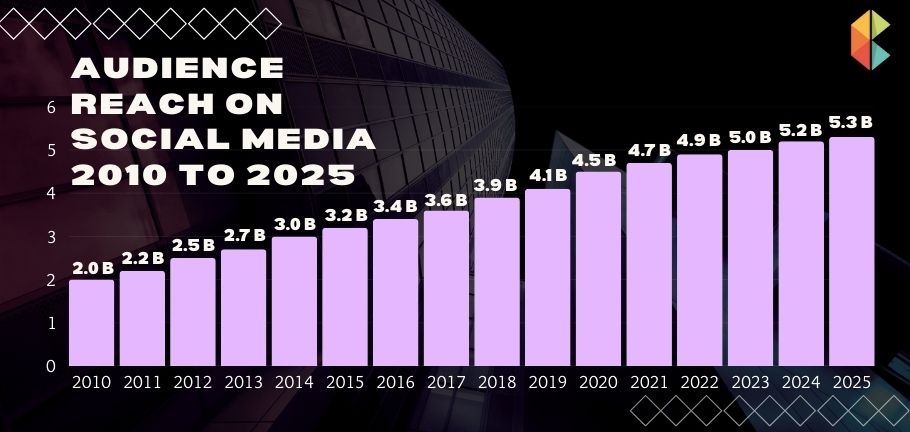
Digital marketing is no longer optional; it’s necessary. Regardless of whether your business is a small bakery, a service business at the local level, or you’re selling products online, your customers have already moved their business online. Understanding digital marketing 101 is essential to interact with them in 2026.
1. Growing Online Audience
Every day, the internet is growing. In 2026, over 5.3 billion people will be using the internet, whether they’re navigating social media, search engines, or apps looking for products and services. People are not just searching—they’re shopping and reading reviews and making decisions online. If your business doesn’t exist, you’re invisible to the majority of your potential customers.
Example: Instead of flipping through a newspaper for ads, people now search on Google: “best bakery near me” or “affordable fitness trainer online.” If your business shows up, you’ve just earned a customer.
2. Cost-Effectiveness Compared to Traditional Marketing
Traditional marketing—like billboards, print ads, TV commercials, or mailers—can be incredibly expensive and risky. You spend the money without knowing if it works. Digital marketing can be a more cost-effective option and offers even entrepreneurs with a small marketing budget the chance to compete with larger brands.
For example, spending just $20 on a Facebook ad campaign could potentially be seen by thousands of people who fit your target population and live in your target city. Compare that to a newspaper ad, running in the hundreds of dollars for the ad that could very well be seen by the wrong audience. Digital marketing allows you to spend less but target the people who will be interested in your product.
3. Data-Driven Results
One of the biggest advantages of digital marketing is the ability to track everything. Unlike traditional marketing, where you don’t know how many people saw your ad, digital tools show you:
- How many people clicked your ad?
- How many people visited your website?
- How many actually bought your product
This means you can adjust your strategy instantly. If one ad doesn’t work, you stop it and try another. That flexibility saves beginners money and helps them learn faster.
4. Future-Proof Skill
Digital marketing is not going to be some trend of business growth in 2026; it’s a trend that will continue into the future. As technology continues to change, businesses will be relying on SEO, social media, and AI-driven campaigns. For learners today, by learning the marketing basics for beginner learners, you will provide valuable skills that could lead to a career.
If you’re just starting, here are the most important areas to learn:
- SEO (Search Engine Optimization): Helps your website show up on Google.
- SEM (Search Engine Marketing): Paid search ads that give instant visibility.
- Content Marketing: Blogs, videos, and infographics that build trust.
- Social Media Marketing: Promoting products on Instagram, Facebook, LinkedIn, TikTok.
- Email Marketing: Sending updates, offers, and reminders to customers.
- Paid Ads: Quick campaigns on Google or Facebook to reach new people.
Example of Real-Life Beginner Campaign
Imagine you sell handmade candles. Here’s a simple beginner’s campaign:
- Build a small website showcasing your candles.
- Post photos and short videos on Instagram and TikTok.
- Write a blog: “Best Candle Scents for Stress Relief.”
- Run a $20 Facebook ad targeting “home decor lovers.”
Within days, hundreds, or even thousands, of people could discover your brand. This is the power of digital marketing 101 in action.
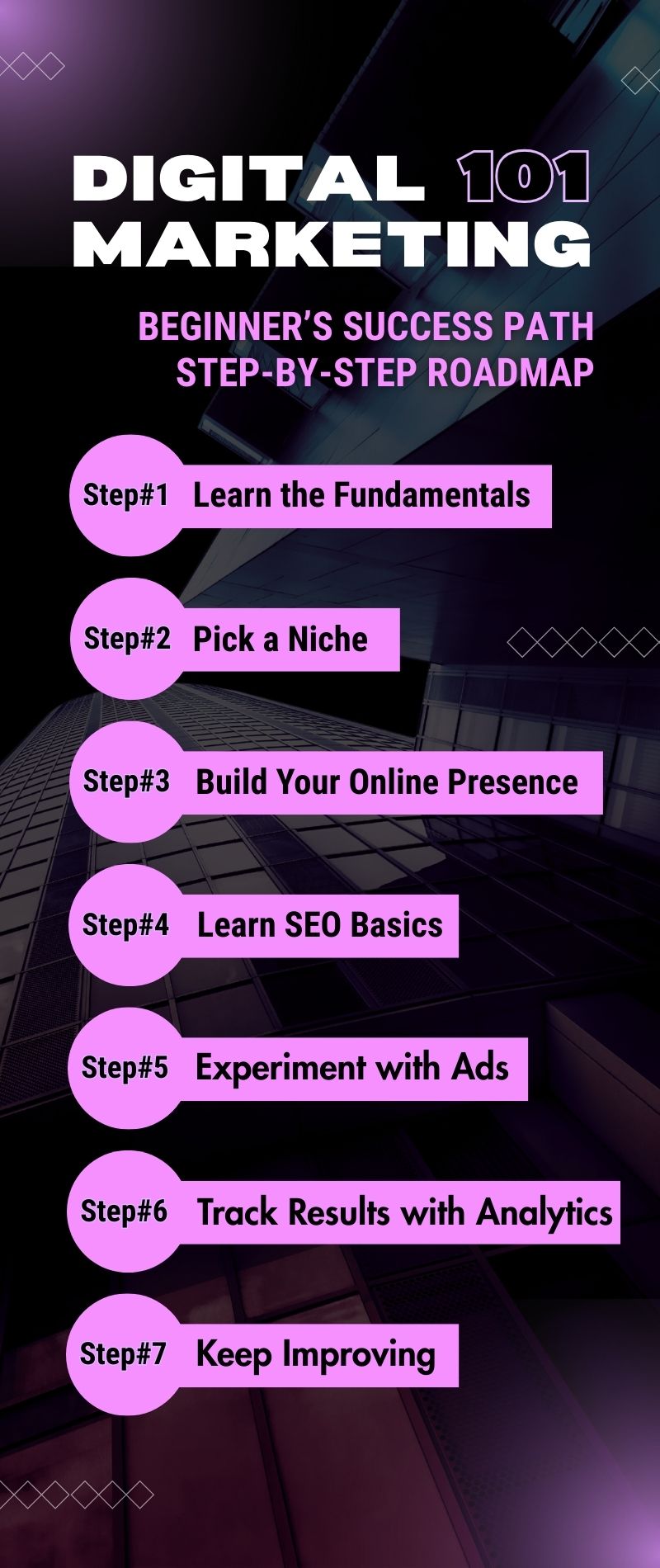
If you’re new to digital marketing, starting your journey may seem difficult, and even impossible. With a well-defined roadmap, a larger goal is possible and easy to navigate. However, if you understand the steps needed to follow so you don’t get confused, you can help yourself grow steadily while leveraging some digital marketing that can yield long-term success.
Step 1 – Learn the Fundamentals
Begin with a good understanding of digital marketing 101, blogs, YouTube videos, and free courses, which will help you learn the basics. Websites like HubSpot and Google Digital Garage are great resources for learning if you are just starting. This foundation prepares you for advanced strategies and helps you avoid confusion later.
Step 2 – Pick a Niche
Choose one specific area to focus on, like fashion, food, or eCommerce; don’t focus on everyone. A niche will help you build content and campaigns that relate to the prospective audience, and this can also allow your brand to stand out in an extremely busy digital marketplace.
Step 3 – Build Your Online Presence
Create a simple, yet professional website that illustrates your products and/or services. Similarly, update your LinkedIn and social profiles to look trustworthy and consistent. Treat this step like building your digital business card that will always be available for networking when needed.
Step 4 – Learn SEO Basics
SEO allows your website to rank higher in Google search results. Learn to implement keywords, headings, backlinks, and on-page optimization. SEO is another way to get free traffic – and free traffic is good because it builds long-term visibility without continuous ad spending.
Step 5 – Experiment with Ads and Social Campaigns
Used together, paid ads can offer visibility insight while you build a foundation for organic traffic. You can start with a small budget on Facebook, Instagram, or Google Ads. You will have to test your design, message, and audience to determine what works best.
Step 6 – Track Results with Analytics
You can use Google Analytics and Google Search Console to analyze the performance of your campaign. Google Analytics will show where your visitors are coming from and what they do when they are on your website. It also offers you evidence to pinpoint the weakest areas in your campaign to improve on or those that are performing well to develop further.
Step 7 – Keep Improving
Digital marketing has evolved in a fast-paced world, with new tools, trends, and methods each year. It is important that you stay well-informed by keeping up with AI tools, webinars, or industry blogs. You will always want to learn more about how to improve and grow your results.
Digital marketing is constantly evolving, and in 2026, new technologies are changing how businesses engage with consumers online. If you are new to digital marketing, pay attention to these important trends to be a competitive market player.
1. AI in Marketing
AI is now considered a foundational part of digital marketing. AI tools can draft compelling ad copies, recommend keywords, analyze customers’ past behaviors, and personalize an email blast. For example, when a customer asks a question in real-time, a firm can utilize an AI-customized chatbot to give an immediate answer while saving the firm time processing customer support queries with improved customer service. For those new to digital marketing, there are various AI tools, such as ChatGPT, Jasper, or Copy.ai, that can be used to speed up content creation and improve results from campaigns.
2. Voice & Visual Search
Many people are using voice assistants such as Siri, Alexa, and Google Assistant to search the internet. Rather than typing, users are able to use their voices, for example, “Find the best pizza near me.” As such, with the advent of visual search tools (for example, Google Lens), users can search in images.
Businesses should now optimize for conversational keywords and ensure that their product images are optimized and searchable. For newer businesses, providing guidance for their content, large or small, to make it usable for voice search and image search is a huge edge.
3. Short-Form Video Content
In the landscape of 2026 social media, short video content is king on TikTok, Instagram Reels, YouTube Shorts, etc. We know short videos (roughly 1 minute or less) tend to be very engaging and highly shareable.
When starting off, building short video content also doesn’t cost a lot—you just need a smartphone and a creative idea! Think of short videos like product demonstrations, tutorials, or behind-the-scenes videos that can receive thousands of views in a matter of hours (yes, hours). This indicates the future of storytelling will be in catchy shorts and engaging video format.
4. Data Privacy & Trust
Increased online activity also increases consumer concern for privacy and security. Regulation updates around GDPR and the privacy policies for Apple and Google make it increasingly difficult to track customers without their consent. Businesses that are transparent about how they use data build trust with customers.
For those just getting started, this simply means concentrating on building real relationships through email lists, valuable content, and trust-based marketing rather than just relying on ads.
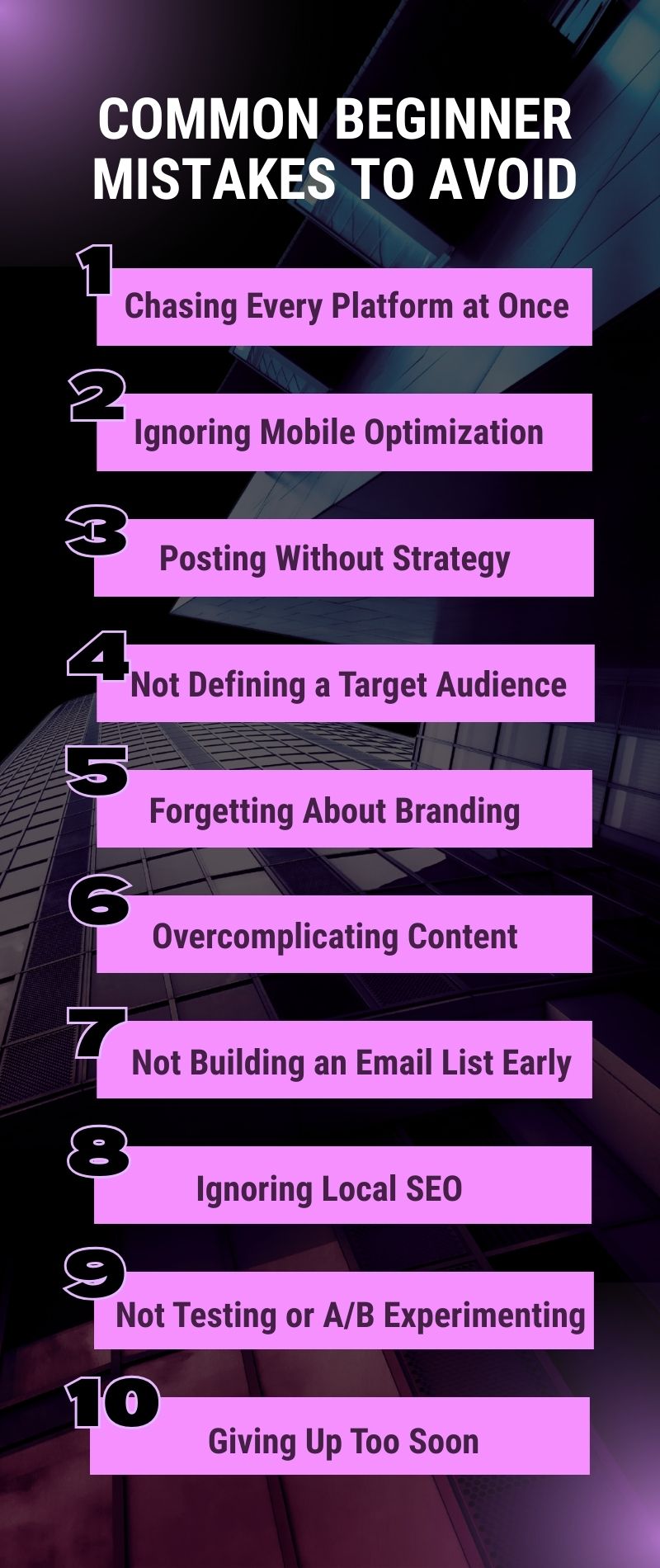
Starting with digital marketing 101 is exciting, but beginners often fall into traps that slow down progress. Here are mistakes many don’t even realize they’re making:
1. Chasing Every Platform at Once
New marketers often think they must be active on Facebook, Instagram, LinkedIn, TikTok, Twitter, and YouTube, all at the same time. This spreads their energy too thin. It’s smarter to master one or two platforms first, then expand gradually.
2. Ignoring Mobile Optimization
Many beginners design websites only for desktop, forgetting that 70%+ of users browse on mobile. If a site loads slowly or looks messy on a phone, people leave immediately. Always test your site on different devices.
3. Posting Without Strategy
It’s easy to get caught up in creating random posts, ads, or blogs without a plan. Beginners often forget that consistency + strategy beat random activity. Every piece of content should have a clear goal (attract traffic, generate leads, or build trust).
4. Not Defining a Target Audience Clearly
Many beginners try to market to “everyone,” which usually means reaching no one effectively. Without knowing who your ideal customer is, your campaigns waste money. A well-defined audience gives focus to ads, content, and messaging.
5. Forgetting About Branding
Beginners often copy designs, logos, or styles from others, which makes their brand forgettable. Simple things like consistent colors, fonts, and tone of voice create a recognizable identity. Even online marketing beginners should start thinking about brand identity early.
6. Overcomplicating Content
Thinking that “professional” means long, complex words is a mistake. Most successful digital marketing uses simple, clear language. Beginners often lose readers by making content too technical or difficult.
7. Not Building an Email List Early
Beginners focus heavily on social media and forget that platforms can change overnight. Building an email list ensures you always have direct access to your audience, regardless of algorithm updates.
8. Ignoring Local SEO
For small businesses, ignoring local SEO is a big mistake. People search “near me” daily, but beginners often fail to optimize their Google Business Profile or add local keywords. This is free traffic left on the table.
9. Not Testing or A/B Experimenting
Many beginners stick with one design, headline, or ad format without testing alternatives. Even small tweaks (like a different button color or call-to-action) can boost results. Skipping A/B testing means missing easy wins.
10. Giving Up Too Soon
One of the biggest hidden mistakes is lack of patience. Beginners expect results in days and quit when they don’t see sales quickly. Digital marketing builds momentum over time—it’s like planting seeds before seeing a harvest.
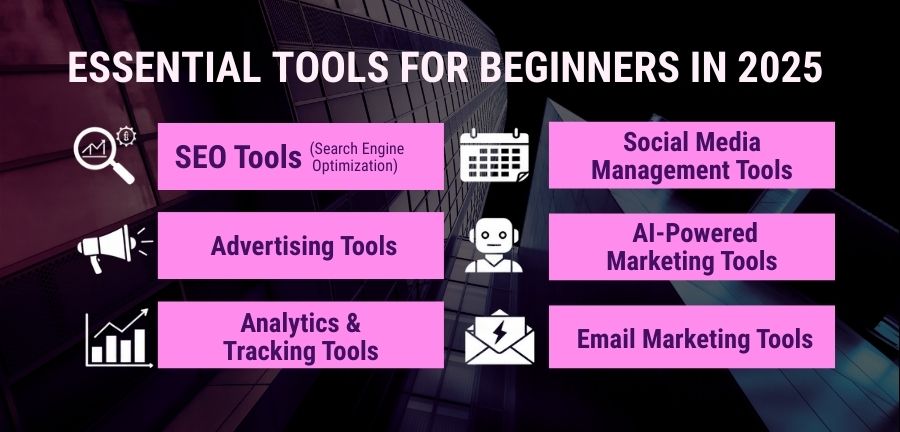
Digital marketing may sound complicated, but the right tools make it much easier. For beginners, these tools act like shortcuts, helping you research, create, post, and track results without needing years of experience. Here’s a breakdown of the must-have tools in 2026 for anyone starting their digital marketing 101 journey.
1. SEO (Search Engine Optimization) Tools
SEO is the backbone of online visibility. These tools help you find the right keywords, study competitors, and improve your rankings. Without SEO tools, you’re just guessing what people search. With them, you can create content people are actually looking for.
- Google Keyword Planner—Free and simple, perfect for keyword research.
- Ahrefs—Advanced tool to analyze backlinks and competitors.
- SEMrush—All-in-one platform for keywords, site audits, and SEO insights.
2. Social Media Management Tools
Posting consistently across different platforms can be stressful. These tools save time by scheduling posts and analyzing performance. These tools help you stay active without being glued to your phone all day.
- Buffer—Easy scheduling for multiple platforms.
- Hootsuite—Offers advanced scheduling and analytics.
- Canva—Not just design, but ready-made social templates.
3. Analytics & Tracking Tools
Digital marketing works because it’s measurable. Analytics tools show exactly what’s driving results. Numbers tell the story. You’ll know what’s working and where to improve.
- Google Analytics—See where visitors come from and what they do.
- Google Search Console—Monitor SEO performance and fix issues.
- Hotjar—Visual heatmaps to see user behavior.
4. Email Marketing Tools
Email is still one of the most powerful ways to build trust and sales. With the right tool, you can start growing your own audience. Social media accounts can vanish, but an email list is yours forever.
- Mailchimp—Free for beginners, simple to use.
- ConvertKit—Designed for creators and bloggers.
- Brevo (Sendinblue)—Affordable with automation features.
5. Advertising Tools
Paid ads give instant visibility. Even with a small budget, these tools let beginners experiment and learn quickly. Ads give you quick results, while SEO and content marketing build slowly in the background.
- Google Ads—Capture people searching for your product.
- Facebook & Instagram Ads Manager—Visual campaigns for engagement.
- TikTok Ads—Growing platform for younger audiences.
6. AI-Powered Marketing Tools
AI is changing the game. Beginners no longer need to be experts; AI does the heavy lifting. AI saves time, reduces mistakes, and makes your campaigns smarter.
- ChatGPT—Generate content ideas, ad copy, or emails.
- Jasper AI—an AI writing tool for blogs and landing pages.
- SurferSEO—Combines AI with SEO optimization.
Conclusion
In 2026, digital marketing is no longer a choice; it’s a requirement! Digital marketing is an essential skill for a student, entrepreneur, or small business owner. Digital Marketing 101 is your starting point to potentially access billions of people directly from your laptop or mobile device. Learning the basics of digital marketing, following a simple beginner’s roadmap, and using the correct tools will allow you to achieve real results without wasting time or money.
Mistakes are part of the process, but you’ll be ahead of the curve if you’re able to avoid the common pitfalls and follow current trends. Feel free to read the free guides, test all the beginner-friendly tools, and build your online presence one step at a time. With patience, consistency, and time, digital marketing can help you achieve infinite possibilities in 2026 and beyond.
Whether you’re creating your first website, building content, or running ads, we have everything you need. Your journey into the world of digital marketing starts now, so take the first step with Concept Beans!
What are the basics of digital marketing for beginners?
The basics include SEO (ranking on Google), social media marketing, content creation, email marketing, and paid ads. Together, these build visibility, traffic, and trust.

How do I start digital marketing in 2026 as a complete beginner?
Start by learning the fundamentals through free blogs, YouTube tutorials, and courses like Google Digital Garage. Then, pick a niche, build a simple website, and begin experimenting with social media or small ad campaigns.
What is the best digital marketing strategy for beginners?
The best strategy is a mix of SEO for long-term results, social media for quick visibility, and email marketing for building a loyal audience. Beginners should focus on consistency rather than perfection.
How much money do I need to start digital marketing in 2026?
You don’t need a huge budget. Many free tools (Google Analytics, Canva, Mailchimp) help you get started. With as little as $20–$50, you can even test Facebook or Google ads.
What mistakes should beginners avoid in online marketing?
Don’t expect overnight success, don’t ignore analytics, and don’t copy-paste strategies blindly. Beginners should also avoid spreading themselves too thin—focus on one platform or strategy at a time.
Is digital marketing still worth it in 2026?
Absolutely. With over 5.3 billion people online in 2026, digital marketing is the fastest, most cost-effective way to reach a global audience. It levels the playing field for small businesses and beginners.
I am Wajiha Ghazal, Co-Founder of Concept Beans Pvt Ltd and AI Digital Marketing Expert and With a focus on AI-powered tools, strategies, and automation, I help businesses scale and thrive online. My expertise spans AI-driven SEO, paid advertising, content marketing, and data-led growth hacking. Passionate about the future of digital marketing, I actively share insights through global platforms and training sessions.


